


Swami Vivekananda’s message to youth of India with reference to Religion, Philosophy, Social Service and National integration culled from his letters....

Vivekananda’s life was brief (1863- 1902) and spanned only 39 years. During this short period after his university education, he mastered several languages like Sanskrit, Bengali, English and French. He had read extensively English literature, Sanskrit and Bengali religious texts, Bible, Koran and Buddhist-Pali texts. He had studied the works of Western Philosophers like Socrates, Plato, Thomas Aquinas, Hegel, Kant and William James. He sang songs in a melodious voice and played several percussion instruments.
After his death the complete works of Swami Vivekananda’s has been published in English in nine volumes. He was a prolific correspondent and to his credit, we must say that four volumes containing all his letters have been published so far. Hence it is well-nigh impossible to discuss even a fraction of his letters. The total number of letters of Swami Vivekananda published with notes number 815. I have been requested to deal with letters of Swamiji pertaining to:
Religion,
Philosophy
Youth and social service
National integration
This is a very tall order and suffice to say that four or five quotations from letters referencing to these four topics will be discussed in this paper.
Religion: The English word religion is loosely used as an equivalent to “Dharma”. The Hindu religion is commonly called “Sanatana Dharma” Swami Vivekananda during his lifetime has discussed all the major world religions such as Christianity, Islam, Jewish, Jainism, Buddhism and Brahmo Samaj sect. Swami Vivekananda did not hate or despise any religion, but he definitely evaluated each one’s core philosophical teachings. He often borrowed good aspects of other religions and blended them with Hindu religion. A few quotations from his letters are given here to show the egalitarian outlook of Swami Viveknanda.
a. To Sj. Pramada Das Mitra dated 7th August 1889: “I mail you sir a book named “Imitation of Christ” written by a Christian Sanyasin. It is a wonderful book. One is astonished to find such renunciation, Vairagya and Dasya-bhakti having existed even among Christians. Probably you may have read this book before, if not, it will give me the greatest pleasure if you kindly read it – Yours etc”
- Vivekananda
The book “Imitation of Christ” Written by Thomas A Kempis was read by Swami Vivekananda. It shows his ecclesiastical taste and a Catholic outlook towards other religions. He identifies Indian values like Vairaghya and Dasya in Christian spiritual tradition.
b. To the same 17th August 1889: “In the Tantra, Acharya has been called a Crypto-Buddhist; views expressed in Prajnaparamita, the Buddhist Mahayana book, perfectly tally with the Vedantic view propounded by the Acharya. The author of Panchadashi also says, “What we call Brahman is the same truth as the Shunya of the Buddhists” . What does all this mean?”
In this letter Swami Vivekananda refers to the Mahayana Buddhist text “Prajnaparamita” which espouses the Advaita Vedanta point of view of Sri Adhi Shankaracharya. Hence Shankara’s critics always called him a crypto-Buddhist (Prachanna Buddha). The author of “Panchadashi” equates the Vedantic concept of “Brahman” with the Buddhist concept of “Shunya”.
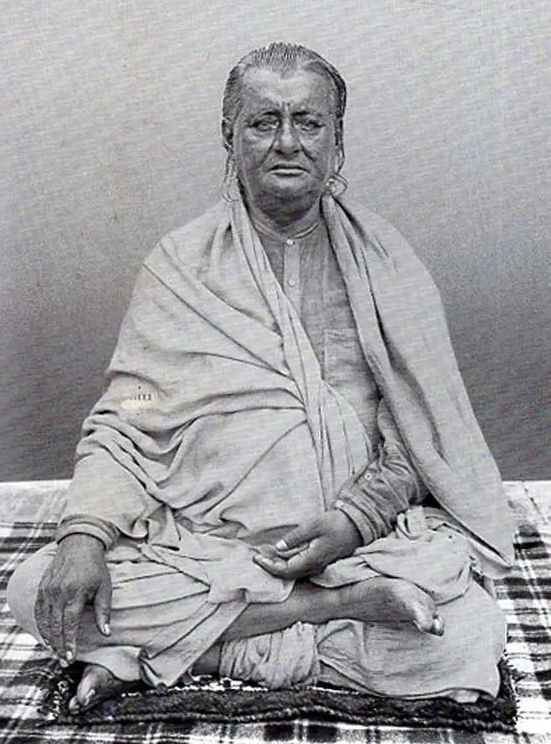
c. "What Buddha did was to break wide open the gates of that very religion, which was confined in the Upanishads to a particular caste. What special greatness lies in his unrivalled sympathy! The high orders of the Samadhi etc,. that lend gravity to his religion, are almost all there in Vedas; what are absent there are his intellect and heart, which have never since been paralleled throughout the history of the world."
To Swami Akhanadananda
February 1890
In this letter Swami Vivekananda recognizes the greatness of Buddha in freeing the Upanishadic philosophy from Brahmin stranglehold. He preached many of the basic percepts of Vedic philosophy and Upanishads in vernacular Pali language. Buddha’s love for common folk and his path to salvation paved the way for its popularity.
d. ……. Know then this is the land of Christians (U.S.A) , and any other influence than that is almost zero. Nor do I care a bit for the enmity of any ‘ists’ in the world. I am here amongst the children of the son of Mary, and the lord Jesus will help me. They like much the broad views of Hinduism and my love for the Prophet of Nazereth. I tell them that I preach nothing against the great one of Gaililee. I only ask the Christians to take in the great ones of Ind along with the Lord Jesus and they appreciate it.
To Sj. Alasinga Perumal
Breezy Meadows,
Metcalf, Mass.,
20th August 1893
In this letter written by Swami Vivekananda from U.S.A. he expresses his unbridled love for Virgin Mary and Jesus Christ. The Christian congregation in American churches did not object to broader and more profound philosophy emanating from ancient rishis of India before Christ.
e. “The Hindu must not give up his religion but must keep his religion within its proper limits and give freedom to society to grow. All the reformers in India made the serious mistake of holding religion accountable for all the horrors of priest craft and degeneration, and went forthwith to pull down the indestructible structure and what was the result? Failure!! Beginning from Buddha to Ram Mohan Roy, everyone made mistake of holding caste to be a religious institution and tried to pull down religion and caste altogether and failed…….”
To the same Chicago
7th November 1893
In this letter Swami Vivekananda warns that the Indians must keep Hindu religion within proper limits. The bigotry of the priestly class, which has hastened the decline of Hindu religion should be checked. The reformers found fault with caste system and identified it with the superstructure of Hinduism. According to Swami Vivekananda the caste system and the basic structure of Hinduism are two different things. According to historians the rigid caste system crystalized in society around 3rd century A. D. Swami Vivekananda tried to rescue the original Vedic philosophy of Hinduism like Swami Dayananda Saraswathi. Many ills of Hinduism like Sati, untouchability, prohibition on sea voyage, no widow remarriages and food taboos came to be added to this superstructure later on.
f. The older I grow the more I see behind the idea of the Hindus that man is the greatest of all beings. So say the Mohammedans too. The Angels were asked by Allah to bow down to Adam. Iblis did not and therefore he became Satan.
To Mrs. Ole Bull, Thousand Iclc
Park, August 1895
The position of man in Hindu religion is centric and indispensable from cosmological point of view.
Philosophy: Swami Vivekananda expounded his philosophical ideas of Hinduism under these two important headings, that is “Advaita Vedanta” and “Raja yoga”. Of course, he makes references to other aspects of Hindu philosophy found embedded in Vedas, Upanishads, Bhagvad Gita, yoga vasishta, puranas and prakranagranthas.
a. “……… in translating the Suktas pay particular attention to the Bhashyakaras and pay no attention whatever to the Orientalists. They do not understand a single thing about our shastras. It is not given to dry philologists to understand philosophy or religion. For instance the word “Anidhavatam” in Rig Veda was translated - “He lived without breathing. “ Now here the reference is really to the chief prana and “Avatham” has the root meaning for unmoved, that is, without vibration. It describes the state in which the cosmic energy or prana remains before the kalpa begins. Explain according to the sages and not according to our sages and not according to the so called European Scholars. What do they know?
Vide
– the Bhashyakaras
To Sj. Alasinga Perumal
20th December 1895
This quotation of Swami Vivekananda reminds one of the book ”The battle for Sanskrit” by Rajeev Malhotra. In this letter to Sj. Alasinga Perumal Swami Vivekananda says while translating a Sanskrit text trust and follow Bhashyakaras and not the Western Orientalists. The European Sanskrit scholars deduce the text to its literal or basic meaning. As non-practicing Hindus they do not understand the cultural and religious underlaying meanings. They are ignorant of the other metaphysical interpretations.

b. In the Krishna incarnation He says that the root of all sorts of misery is “Avidya” (Nescience) and that selfless work purifies the mind. But “Kim Karma Kamar Kaurtha” etc- Even sages are bewildered to decide what is work and what is no work (Gita).
To Swami Ramakrishnanda
1895
In this letter to Swami Ramakrishnanda, quotes from Bhagvadgita, where Lord Krishna blames “Avidya” for all the miseries of the world. He makes distinctions between selfless work and selfish work equated with “no-work”.
c. To Mr. E.T. Sturdy (13th February 1896): “but Mr. Tesla was charmed to hear about the Vedantic prana and Akasha and the Kalpas , which according to him are the only theories modern science can entertain. Now both Akasha and prana again are produced from the Cosmic Mahat , the universal mind, the Brahma or Ishvara. Mr. Tesla thinks he can demonstrate mathematically that force and matter are reducible to potential energy. I am to go and meet him next week to get this new mathematical demonstration. In that case the Vedantic cosmology will be placed on the surest of foundations."
In this letter Swami Vivekananda describes his encounter with great scientific genius Tesla. He was interested in early Hindu Cosmology and science theories. This later continued with the quantum mechanists flirtation with Indian Vedantic concepts.
d. Written to American lady (13th December 1986): Renunciation – non-resistance- non-destructiveness are ideals to be attained through less and less worldliness, less and less resistance and less and less destructiveness. Keep the ideal in view and work towards it. None can live in the world without resistance, without destruction, without desire. This letter written to an American lady by Swami Vivekananda about the essential requirements of a Sadhaki to make a spiritual progress. These three important Yoga Sadhanas , are required for enlightenment. They are renunciation of worldly attachments, non-resistance to good vibrations and non-destructiveness (Ahimsa). Our supreme goal to attain ”Gnana” must not be forgotten.
e. To Mohammed Sarjaras Hussain (10th June 1898): “Whether we call it Vedantism or any ism, the truth is that Advaitism is the last word of the religion and thought and the only position from which one can look upon all sects with love. We believe it is the religion of the future enlightened humanity”
This letter to Mohammed Sarjaras Hussain Swami Vivekananda explains how Vedantic philosophy transcends the narrow barriers of other religions like Christianity, Islam and Buddhism. Vedanta can lift a man’s soul through Raja Yoga without trammeling on the toes of other religion. Swamiji’s words about Vedanta becoming an international ideology has been a prophetic statement. Today the whole world has embraced yoga and meditation.
3. Youth and Social Service:
a. To Sj Haridas Viharidas Desai; 20th January 1891
Three things to make every man great, every nation great:-
Conviction of powers of goodness.
Absence of jealousy and suspicion.
Helping all who are trying to be and do good.
In this letter to Sj. Haridas Viharidas Desai he mentions the three important factors, which makes an individual and nation great. On adherence to good qualities over bad qualities. Ultimately good wins over evil forces. Trust and faith are more important than a practice of jealousy and suspicion. Try to be good and do good to others. Simple homilies loaded with truth.
b. To Swami Ramakrishnanda 19th March 1894: “We are so many sannyasins wandering about, and teaching the people meta physics – it is all madness. Did not our Gurudev used to say , ‘An empty stomach is no good for religion?’ That those poor people are leading the life of brutes is simply due to ignorance. We have for all ages been sucking their blood and trampling them under foot”
In this letter to Swami Ramakrishnanda, Swami Vivekananda stresses the importance of “Daridra Narayana Seva” , which is an important activity of Sri Ramakrishna Mission to this day. In times of famine and flood the monks deliver food and clothing to the poor and needy people.

c. Sri Alasinga Perumal dated 1894: “So long as the millions live in hunger and ignorance, I hold every man a traitor, who having been educated at their expense, pays not the least heed to them. I call those men who strut about in their finery, having got all their money by grinding the poor wretches, so long as they do not do anything for those 200 millions who are now no better than hungry savages.”
In this letter to Sri Alasinga Perumal, Swami Vivekananda says any individual who does not help the poor and downtrodden in a society is a traitor. The rich people acquire wealth by exploiting the helpless poor. They get educated and live in big mansions at the cost of the poor. Here Swamiji stirs the conscience of the creamy layer to do social service.
d. Sri Alasinga Perumal (20th August 1893): “Oh! How my heart ached to think of what we think of the poor, the low in India. They have no chance, no escape, no way to climb up. The poor, the low, the sinner in India have no friends, no help – they cannot rise, try however they may. They sink lower and lower every day, they feel the blows showered upon them by a cruel society and they know not whence the blow comes. They have forgotten that they too are men. And the result is slavery.”
This is another letter of Swami Vivekananda to Sri Alasinga Perumal writes about the helpless poor. They have no friends and nobody to help them with food and shelter. Their economic conditions worsen by the day. Finally they become slaves to the rich and powerful.
e. Sri Ramkrishna Mission plague service was promptly initiated on Good Friday 1899 under Swamiji’s instructions and did considerable work in a well-organized way. He himself came to live in a poor house to inspire courage in the people and cheer up the workers. The whole management was placed in the hands of Sister Nivedita as president and secretary, the Swamis Shivananda, Nityananda and Atmananda as assistants.
This is an instance of Swami Vivekananda’s direct action. In 1899 he inspired and enthused the monks and other young men to take up plague relief work in Calcutta. This team of social workers was led by Sister Nivedita. Their noble work was lauded by the British Colonial administrators.
4. National Integration
a. Swami Vivekananda wrote to some of his followers in India from across the sea: “Fifty centuries are looking on you, the future of India depends on you”. Perhaps the disciples were amazed at such bold words. But the seer with his prophetic vision saw across the corridor of time what was coming ahead.
This quotation coming from across the sea sounds prophetic. We must take the note of optimism embedded in the sentence. A good half-century before India gained independence, Swamiji like Napoleon Bonaparte before sphinx is declaring to the world, that India will arise from poverty, ignorance and superstition to become a “Vishwaguru”.
b. India wants the sacrifice of at least a thousand of her young men- men, mind and not brutes. The English Government has been the instrument brought over here by the Lord, to break your crystallized civilization and Madras supplied the first men who helped in giving the English a footing. How many men, unselfish thorough going men, is Madras ready now to supply, to struggle unto life and death to bring about a new state of things – sympathy for the poor- and bread to their hungry mouths- enlightenment to the people at large- and struggle unto death to make men of them who have been brought to the level of beasts, by the tyranny of your forefathers? – yours etc
To Sj. Alasinga Perumal
10th July 1893
In this address to the citizens of Madras, Swami Vivekananda reminds the audience that East India Company got toe hold in India, by occupying Madras and later the Madras soldiers assisted in British expansion of South India. At present he wants unselfish and courageous young men of Madras to come forward to liberate the country.
c. To Sj. Haridas Viharidas Desai, 20th June, 1894: “Educate and raise the masses, and

thus alone a nation is possible. Our reformers do not see where the wound is, they want to save the nation by marrying the widows; do you think that a nation is saved by the number of husbands its widows get? Nor is our religion to blame, for an idol more or less makes no difference. The whole defect is here. The real nation who live in cottages have forgotten their manhood, their individuality. Trodden under the foot of the Hindu, Mussalman or Christian, they have come to think that they are born to be trodden under the foot of everybody who has money enough in his pocket, They are to be given back their individuality. They are to be educated."
In this letter to Sj. Haridas Viharidas Desai, Swami Vivekananda writes how universal education alone can bring about liberation of India. Social reforms like widow re-marriage alone will not save the Indian society. The wealthy Indians have exploited the poverty stricken masses. They can be saved only by imparting education. The poor man must be given back his dignity, self-respect and individuality.
d. To Justice Sir. S. Subrahmanya Iyer, 3rd January 1895: “I fully agree with the educated classes in India, that a thorough overhauling of society is necessary. But how to do it? The destructive plans of the reformers have failed. My plan is this: We have not done badly in the past; certainly not. Our society is not bad but good, only I want it to be better still. Not from error to truth, from truth to higher truth, from good to better, best. I tell my country men that so far they have done well- now is the time to do better.
Swami Vivekananda in this letter to Justice Subrahmanya Iyer advocates thorough over-hauling of Indian society. Even today this remains as a goal of the nation. Swamiji says our society is not bad, but good, but he wants it to be better. India must progress from truth to higher truth. Being only better is not enough, we must become the best.
f. Swami Vivekananda visited Madras in January 1897 for nine days. It was during this visit he gave the stirring lecture “The future of India”: “Children of India, I am here to speak to you today about some practical things, and my object in reminding you about the glories of the past is simply this . Many times I have been told that looking into the past only degenerates and leads to nothing, and that we should look to the future. That is true. But out of the past is built the future. Look back, therefore, as far as you can, drink deep of the eternal fountains that are behind, and after that, look forward, march forward and make India brighter, greater, and much higher than she ever was. Our ancestors were great.”
In this lecture titled “The future of India”, Swami Vivekananda reminds the audience of India’s glorious past. He emphatically says, “our ancestors were great”. The past history need not be a millstone around our neck. He wants us to drink deep from the eternal fountains of India’s past. He wants young men and women of India to make the country brighter, greater and much higher.

Swami Vivekananda arrived on the horizon of 19th century India to inspire, enthuse and awaken the slumbering spirit of young men and women. In his speeches and writings, what we discover in 21st century is clarity in thinking, a nationalistic approach and overriding optimism about the future of India. A deep faith and conviction guided by Sri Ramakrishna Dev and Sri Sarada Mata. An awareness of his own frailty and impending premature death brings about an urgency to accomplish his noble goals. The establishment of Sri Ramakrishna Mission on Buddhist and Christian lines is a crowning achievement of Swami Vivekananda.
(This paper was presented by Prof. S. Naganath, at The National Conference on 24th March, 2026 at the Post Graduate Department of Philosophy, University of Mysore, Mysore.)


